

Blog
Best Types of Printers and Their Uses for Home and Office

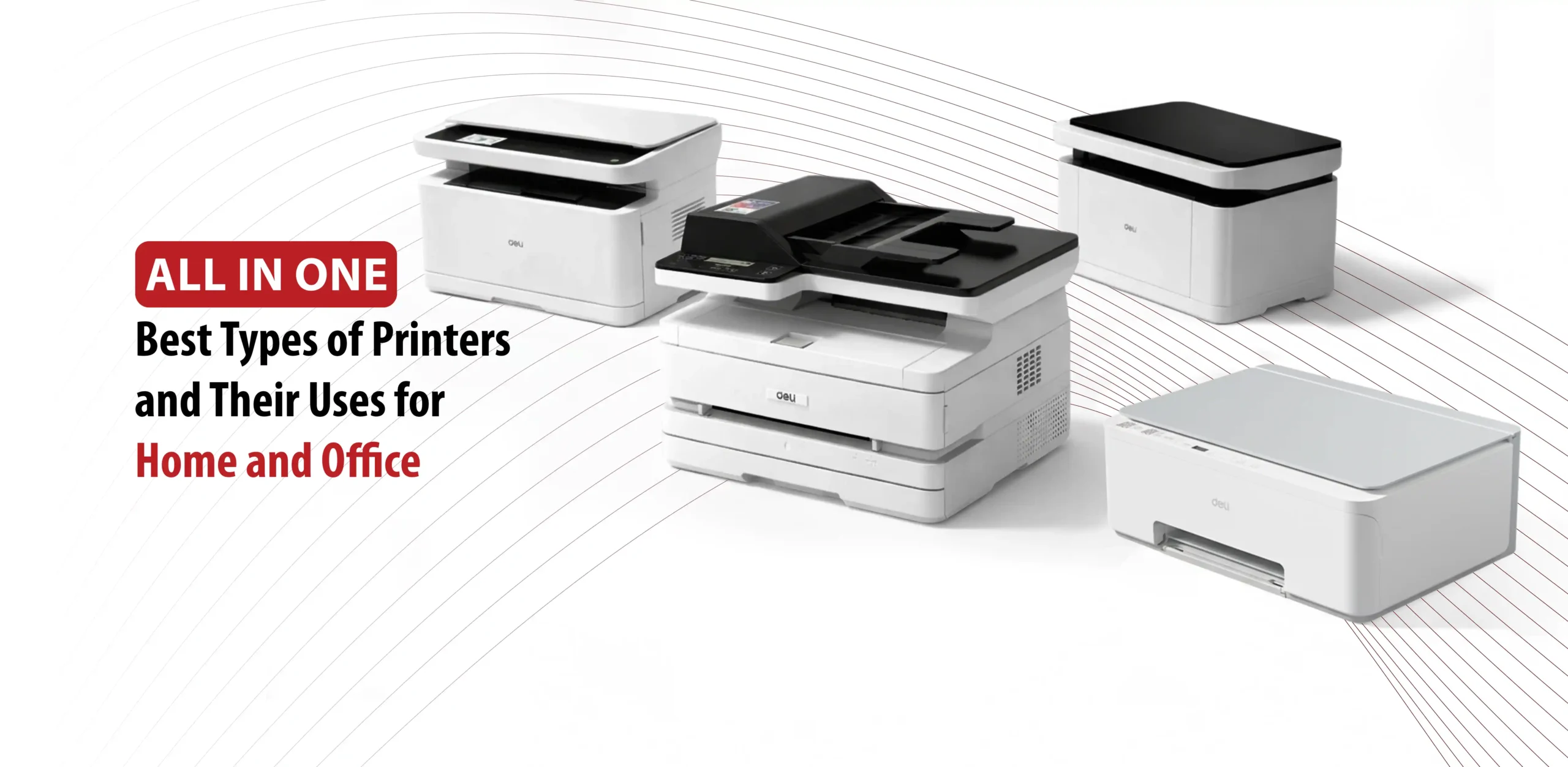
The integration of technology into tasks once exclusive to humans has become a rapidly accelerating reality that cannot be ignored; this transformation is now easier and more widespread than ever before. With the continuous changes in our daily lives, printers have emerged as one of the most prominent devices that revolutionized production, replacing manual labor with results of higher precision and professionalism. Follow along with this article to discover the different types of printers and choose what best fits your needs.
To begin, let’s define what a printer is: it is a device that allows you to convert digital data stored on a computer into a tangible visual format whether text, graphics, or images by printing them onto physical media such as paper.
Printed output is generally categorized into two main versions: the Hard Copy and the Soft Copy. The hard copy typically appears in two primary orientations: Portrait and Landscape. The choice between them depends on the nature of the content; portrait is used for letters, reports, and books, while landscape is preferred for tables and charts.
Just as print formats vary, so do the types of printers and their specifications, which we will explore in the following lines. But first, before diving into the various categories, let’s answer: How many types of printers are there?
How many types of printers are there?
We can’t answer the question of how many types of printers there are with a specific number, as they are numerous and diverse. However, we can categorize the different types of printers as follows:
- Laser printers.
- Inkjet printers.
- Thermal printers.
- Barcode and label printers.
- 3D printers.
- Photo printers and portable printers.
In the following sections, we will discuss each of them in detail.
The Most Important Types of Printers and Their Uses
The variation in printer types leads, consequently, to a difference in their uses. Each printer is suitable for certain tasks and may not be appropriate for others. Below is an overview of each of the various types of printers and their respective uses.
Laser Printers
Laser printers vary between monochrome (black only) and color laser printers. They use a dry toner powder that is fused onto the paper by a high-temperature drum. Therefore, laser printers are considered the most suitable for printing images on glossy paper, as they can absorb the smaller particles of water-soluble dye inks completely beneath the protective top layer of glossy photo paper, providing a very high-gloss finish.
Laser printers are the ideal choice for printing business documents, as they offer the highest levels of quality and durability, with superior smudge resistance for both monochrome and color prints on plain paper. Furthermore, these documents are characterized by their suitability for long-term preservation and archiving in appropriate environments, such as archive rooms and dedicated office storage warehouses.
If you need to print in high volumes, a laser printer is the most appropriate and efficient solution. This is partly due to the toner cartridges used, which outperform others by achieving higher yields and a lower cost per printed page.
Laser printers represent an ideal choice for homes, home offices, and small work environments with heavy usage, thanks to the integrated advantages they offer, including high printing speeds, performance reliability, cost-effectiveness, and ease of daily operation and use.
Inkjet Printers
Inkjet printers are divided into several types based on the printing technology used; however, the two most important categories are: Continuous Inkjet (CIJ) printers designed for industrial applications, and Drop-on-Demand (DOD) printers intended for office and personal use. These printers are distinguished by their high efficiency in producing professional-quality color prints and graphics.
Types of Inkjet Printers
Continuous Inkjet (CIJ): Categorized as a non-contact printing technology, it works by ejecting electrically charged ink droplets through a printhead nozzle. Speed is the primary advantage of this technology, with a production capacity of up to 120,000 droplets per second, making it the ideal choice for high-speed production lines seeking to maintain their pace without compromising print quality.
Thermal Inkjet (TIJ): This technology relies on an ink cartridge integrated with thermal resistance elements. When an electric current passes through these elements, the temperature of the adjacent ink rises, forming tiny droplets at the cartridge nozzles, which are then ejected with high precision onto the printing surface. This process is executed in millionths of a second, and the ejection mechanism provides a wider range for delivering ink to the surface. Thus, TIJ technology combines extreme speed with exceptional quality, enabling it to keep pace with the highest production line speeds without any compromise in print accuracy.
Drop-on-Demand (DOD) Inkjet Printers: These are employed in demanding industrial applications that require printing on various surfaces, such as wood, tools, gypsum boards, metals, concrete, plastic, foam, and packaging materials. Each printhead contains a set of independent valves, typically ranging from 7, 16, to 32 valves, which print dots at regular and precise intervals. These valves are arranged in a single vertical row, each operating with complete independence in opening and closing to generate ink droplets as needed. As the product passes in front of the printhead, these droplets combine to form the required characters and symbols.
High-Resolution Inkjet Printers: These have undergone significant development over the last decade, with modern generations relying on piezoelectric technology to produce extremely clear and sharp images. The printing height from a single printhead reaches up to 100 mm, and multiple printheads can be grouped together to achieve heights exceeding 900 mm, opening broader horizons for large-scale industrial printing applications.
Thermal Printer
A thermal printer is a printing device that combines speed and silence simultaneously. It is distinguished by its complete elimination of traditional ink, as it relies on heating technology to transfer text and images onto special heat-sensitive paper using a precision printhead. These printers are the ideal choice for printing Point of Sale (POS) receipts, barcode labels, and tickets, standing out for their practical advantages such as fast performance, compact size, and high efficiency in retail environments.
Thermal printers operate using two primary technologies: the first is Direct Thermal printing, in which the printhead is heated to contact special heat-sensitive paper, causing the paper’s color to change in heated areas to reveal the printed content, usually in black. The second is Thermal Transfer technology, which uses heat to melt a wax or resin layer on a special ribbon and transfer it onto the surface of plain paper to form the required prints.
Thermal printers possess a range of advantages that make them a distinct practical choice; they completely dispense with ink, which significantly reduces operating and maintenance costs. They also outperform traditional printers in receipt printing speed while maintaining low noise levels. Additionally, their compact size and light weight make them ideal for tight spaces and on-the-go use. Furthermore, they require limited maintenance due to having few moving parts.
Key Uses: Thermal printers have a broad presence in multiple fields; they are widely used for printing POS receipts in restaurants and retail stores, in label printers for warehouses and shipping companies, as well as for issuing transportation and parking tickets. ATMs also rely on them for printing transaction receipts.
Types of Thermal Paper: These printers rely on thermal paper treated with a special chemical layer that reacts to heat to display the printed content. It is worth noting the necessity of using the appropriate paper for these printers, as incompatible paper can damage the printhead and impair the device’s efficiency.
Therefore, the thermal printer represents the optimal solution for business needs that require rapid printing of receipts and labels, thanks to its high efficiency, simplicity of operation, and low maintenance costs.
Barcode and Label Printer
Barcode and label printers are an essential pillar in inventory management operations, shipment tracking, and price displays in both stores and companies. Most of these printers rely on thermal printing technology, which branches into two types: Direct Thermal printing, suitable for short-term labels, and Thermal Transfer, designated for labels that require a higher degree of durability and endurance.
These printers feature printing speeds of 152 mm/s and a resolution of 203 DPI, making them a reliable choice for the retail, office, and shipping sectors. They also support multiple connectivity interfaces, including USB and Serial ports, ensuring easy integration with various systems and devices.
3D Printer
The 3D printer represents a true revolution in the world of digital manufacturing, as it allows for the conversion of any virtual design into a physical tangible object through the sequential deposition of materials, layer by layer. Its applications are not limited to a specific field; rather, they extend to serve broad sectors such as industry, medicine, education, and prototype development. The materials used vary among different types of plastics, such as PLA and ABS, as well as Resin. Meanwhile, leading global brands like Bambu Lab, Creality, and Elegoo offer various models such as the P2S, SparkX, and Centauri series to suit different needs and budgets.
Photo Printer
Photo printers are divided into two main categories: the first consists of small-scale portable printers that allow for instant printing directly from a smartphone; the second includes professional desktop printers designed to produce high-quality, large-format images to meet the most demanding requirements.
Portable Printers
Portable printers represent the ideal companion for those who need to print on the go. They are divided into two main categories: document printers oriented toward the business environment, and small photo printers that, in most cases, operate without the need for ink. These devices share the characteristics of being lightweight and relying on rechargeable batteries, making them a favorite choice for travelers, photographers, and hobbyists alike.
Different Types of Printers from Deli and Their Uses
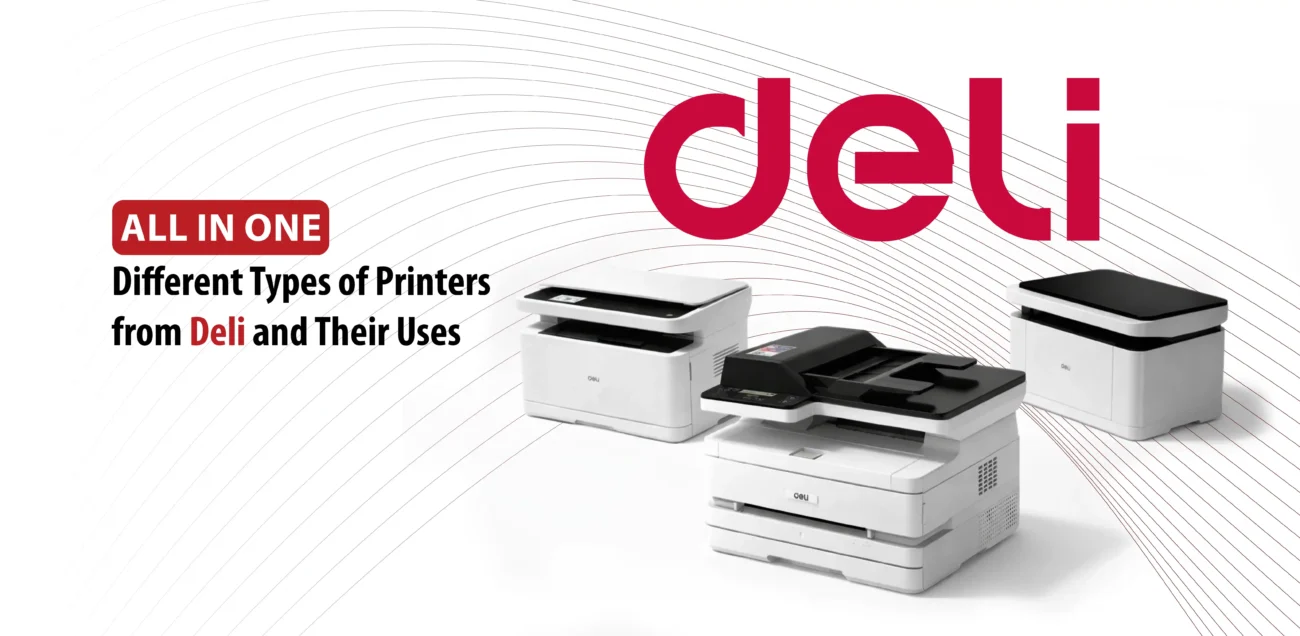
Deli is one of the most prominent names in the printing industry, both in China and globally, with a long and established history that earns it high credibility among users. Its products are characterized by superior manufacturing quality and competitive pricing, making them a preferred choice in the market, in addition to a diverse lineup that meets home, office, and other professional needs. Among the most notable types offered by the company are:
Deli M2500DNW Printer – Monochrome Laser
The Deli M2500DNW combines printing, copying, and scanning functions into a single integrated device. It features a printing speed of 28 ppm, with support for automatic duplex printing at a speed of 16 ipm. The first page out time is less than 8 seconds, while the warm-up time does not exceed 20 seconds.
Connectivity and Compatibility: The printer supports multiple connection interfaces, including USB 2.0, Ethernet, and Wireless (Wi-Fi 802.11b/g/n). It is compatible with Windows, iOS, and Android operating systems via the Deli e+ app.
Copying and Scanning: The copying speed is 28 cpm with a resolution of 600×600 DPI, offering the ability to produce 1 to 99 copies and supporting ID card copying. The scanner supports JPG, PNG, BMP, PDF, and TIFF formats.
General Specifications: The printer operates in temperatures ranging from 5 to 35°C, with a noise level not exceeding 58 dB during printing and 30 dB in standby mode. Its dimensions are 396×367×302 mm with a net weight of 9.0 kg, and it has an expected lifespan of up to 5 years.
Deli D511W Printer – Inkjet
The Deli D511W printer offers an integrated solution that combines printing, copying, and scanning functions into a single device, and is characterized by being monochrome. It enables smart control via the Deli Print app and supports multiple connectivity options, including USB, Wi-Fi, and Bluetooth, ensuring high flexibility in usage.
Deli Thermal Receipt Printer
The Deli thermal printer provides a practical and fast solution for receipt printing. It operates using thermal printing technology, which completely eliminates the need for traditional ink, printing in black on special thermal paper. This makes it a reliable choice for points of sale and daily commercial use.
With the diversity that Deli offers in its printer lineup, the company proves that it thoroughly understands the needs of various users. Whether you are looking for a professional laser printer for the office, a color inkjet printer for daily use, or a fast thermal printer for points of sale, you will find in Deli products the most suitable choice that combines high quality with an affordable price. It is quite simply a reliable partner for all your printing needs.
At the conclusion of our journey through the world of printers, it is clearly evident that these devices are no longer just printing tools; they have become an essential partner in the technological transformation reshaping our daily lives.
With the diversity of available options, ranging from laser and inkjet to thermal printers and beyond, it is now possible for everyone to find the printer that fits their needs and budget, whether at home, in the office, or in a professional work environment. Choose wisely and invest in the right device to achieve the best results with the least effort and cost.