

Blog
How to Choose a Hotel Safe

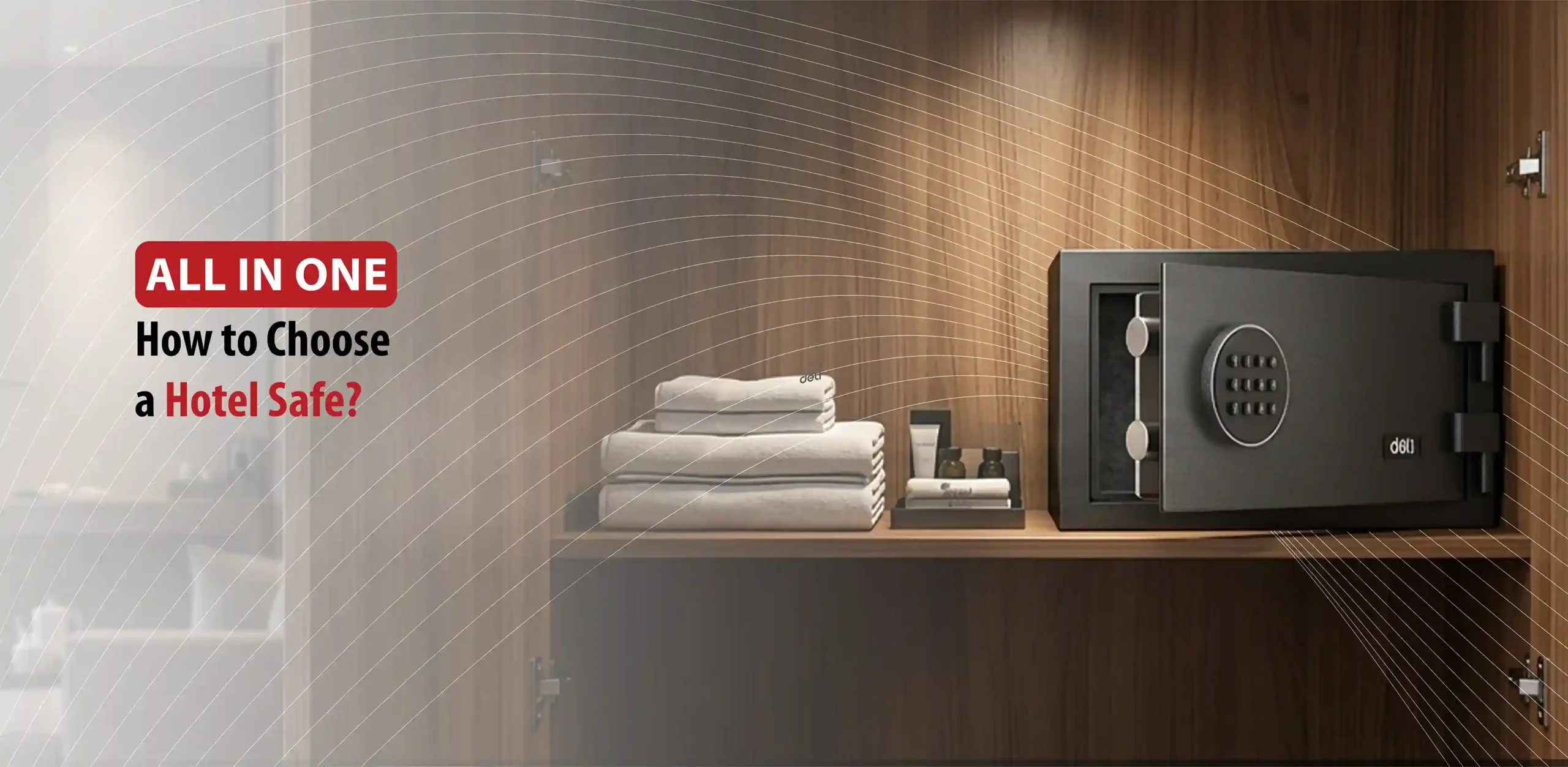
A hotel safe gives guests a secure place to store their valuable items such as passports, wallets, jewelry, and electronics. That’s why choosing the right hotel safe is important for both hotels and guests. So how to choose a hotel safe? For hotels, the right choice needs to balance security with convenience because guests should be able to use the safe and store their items without complicated instructions.
Safes for hotel rooms can differ in locking method, size, security features, and ease of use.
In this article from All in One, we will cover lock type, capacity, security, fire protection, and usability.
What to Consider When Choosing a Hotel Safe
There isn’t a single best hotel safe that suits every property, the right choice depends on the hotel’s room type, guest needs, available space, and security requirements.
Before choosing a hotel safe, you should look into a bunch of factors before settling on the hotel safe that your hotel needs.
Security
Consider whether an electronic or digital locking system is more suitable for your hotel than a traditional key operated lock. Electronic hotel safes can offer convenient access for guests, while key lock safes provide a simpler, more traditional option.
Size and Capacity
Choosing a hotel safe with enough internal space for the items guests are likely to store is important. Put in your mind common valuables such as passports, cash, jewelry, smartphones, and small electronic devices, while also making sure the safe fits comfortably in the available room space.
Construction
Pay attention to the materials and overall construction of the safe. A durable body, strong door, and reliable hinges can contribute to the safe’s ability to protect its contents and withstand regular use by different hotel guests.
Fire Protection
If fire protection is an important consideration for the property, check whether the safe is specifically designed and tested to provide fire resistance.
Ease of Use
A hotel safe should be simple enough for guests to operate without extensive instructions. The controls, keypad, locking process, and opening mechanism should be straightforward, especially because guests may only use the safe for a short period during their stay.
Installation
Consider where the safe will be placed inside the hotel room and how it will be secured. Depending on the model, the safe may need to be anchored to furniture or another fixed structure to help prevent someone from simply removing it from the room.
Digital vs Key Locked Hotel Safes
Digital in-room hotel safes use an electronic keypad for PIN entry, while key locked models rely on a physical key.
Digital/Electronic Hotel Safes
- Convenience: Guests set a temporary 3 to 6 digit PIN code upon closing, meaning there is no physical key to carry to the pool or lose.
- Speed: Unlocking is instantaneous by punching in the chosen numbers.
- Management: Hotels maintain a master override code or external programmer tool if a guest checks out and leaves the safe locked.
- Drawbacks: They rely on internal batteries that can die, though an external battery pack or mechanical override key is usually available to staff.
Key Locked Safes
- Simplicity: Guests receive physical keys at check-in to lock and unlock the box.
- No Power Needed: There are no circuit boards, batteries, or electronic glitches to worry about.
- Management: Staff must track, issue, and recover physical keys for every single room change.
- Drawbacks: If a guest loses the key during their stay, it creates an operational delay and requires maintenance intervention.
That doesn’t automatically mean that the digital hotel safe is better, the choice depends on your property’s priorities.
Hotel Safe Size and Storage Capacity
Understanding a hotel’s safe size will help hotels choose a safe that can accommodate realistic guest belongings without taking up unnecessary space.
It’s important to consider the type and size of items that the guests might store.
A room safe should have enough internal space for common items such as:
- Passports and documents
- Wallets and cash
- Jewelry
- Smartphones
- Tablets
- Small electronics
You should also know where the safe is going to be installed or placed inside the room, larger safes may offer more storage but require more room and may be less convenient to install.
So a safe that is technically secure but too small for the items guests actually want to store may not be practical.
Hotel Safe Security Features
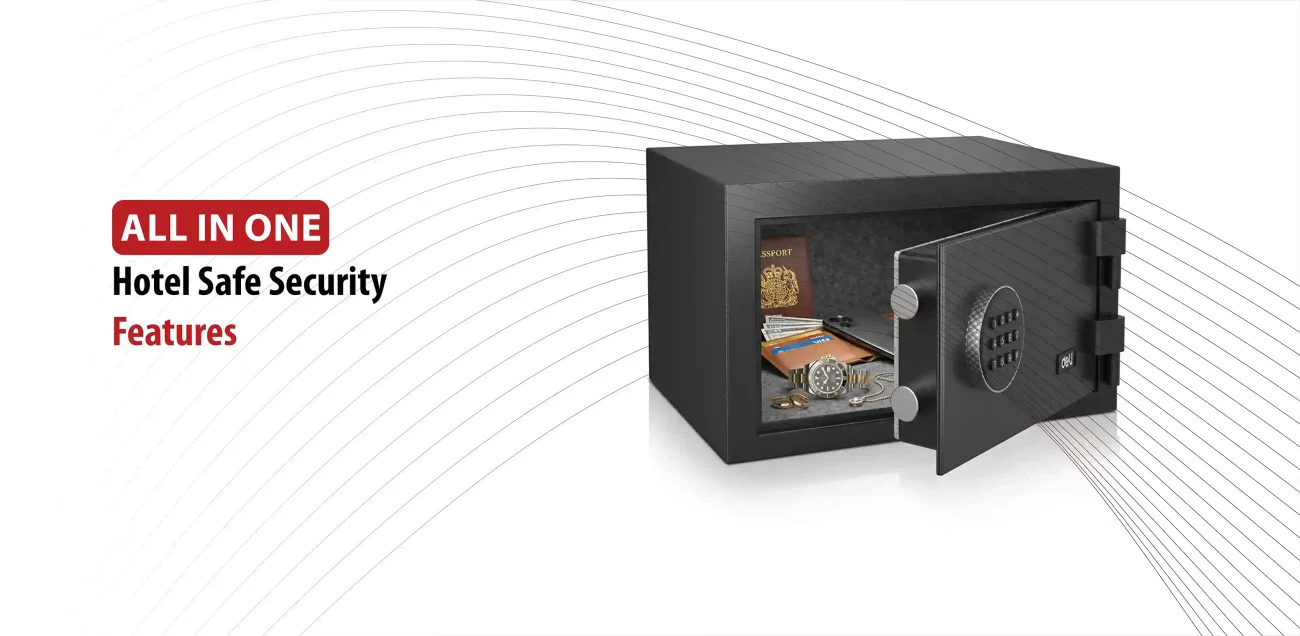
When choosing a hotel safe, look beyond its appearance and consider the security features designed to protect guests’ valuables. A strong steel body, durable door, and secure hinges can help the safe withstand regular use and unauthorized attempts to access its contents. For an electronic hotel safe, features such as keypad access, automatic locking, and protection against repeated incorrect codes can provide an additional layer of security. Some models may also include an emergency or override access method for authorized hotel staff. Installation is another important consideration, as properly anchoring the safe to suitable furniture or a fixed structure can help prevent it from being removed. Ultimately, the best hotel safe combines reliable construction, secure access, and proper installation.
Fireproof Construction and Protection
Some safes are designed with fire resistant or fireproof construction, while safe models focus primarily on security against unauthorized access. If fire protection is important for your hotel, make sure to check whether the safe has a specific fire resistance rating or tested protocol level. Fire protection can be particularly relevant for documents, cash, and other sensitive valuables.
Not every safe will be fireproof just because it’s made out of metal. So hotels should check the manufacturer’s specifications and certifications rather than assuming all safes offer the same protection.
Ease of Use for Hotel Guests
A hotel safe should be easy for guests to operate, especially since they may only use it for a few days during their stay. A digital hotel safe with a clear keypad and simple instructions can make it easier for guests to set or enter their access code, lock the safe, and open it when needed. The display and controls should be straightforward so guests can quickly understand whether the safe is properly locked. Hotels should also have a clear procedure for assisting guests who forget their code or experience an issue. The best safe for hotels rooms is not necessarily the one with the most features, but one that guests can use confidently and without confusion.
Choosing the Right Hotel Safe for Your Property
The right hotel safe depends on the type of the room, the needs of your guests, and the space available. For standard hotel rooms, look for a practical size, reliable locking system, straightforward operation, and enough capacity for everyday valuables. Larger or higher end rooms may require more internal space for electronics, along with additional security and specific installation requirements. If convenience is a priority, an electronic or digital hotel safe with simple controls can make access easier for guests. Before choosing a model, compare its dimensions, locking mechanism, security features, fire protection, installation requirements, and manufacturer specifications. The best hotel safe is the one that meets your property’s specific requirements.
Conclusion
Choosing a hotel safe requires more than looking for a secure locking system. Hotels should consider security, size, construction, fire protection, ease of use, and installation to find an option that suits their property and guests. After considering these factors, hotels can compare available models based on their room requirements, available space, and the features they need. All in One’s hotel safe provides an option for properties looking for practical security and convenient guest use.